Digital Infrastructure for Cross-Border Business Services

Core Business
- Open opportunities (not expired)
- 46
- Mining Projects Zone
- 16
- Featured Client Cases
- 7
- Site-wide Service in 4 Languages
- ZH · FR · EN · AR
Core Service System


Showroom and Conference Services
Integrated physical display and exhibition/conference services


Moroccan trade policy & investment guide
Verified facts from official sources: competent authorities, thresholds, rates and deadlines — plus the institutional map by sector.
Industry Solutions
| Mining Exploration and Developmentmining | Non-phosphate minerals in Morocco follow the three-tier mining licence system under Mining Law No. 33-13—exploration authorization → research permit → exploitation licence—approved by the Ministry of Energy Transition and Sustainable Development (MEM), while the National Office of Hydrocarbons and Mines (ONHYM) is responsible for geological data and cooperative exploration. Exploration authorization areas cover 100–600 square kilometres (2 years, renewable for 1 year); an exploitation licence is valid for 10 years and can be continuously renewed, must be held by a legal entity in Morocco, and foreign investors may hold 100% equity. Mining licence holding costs are low (50 dirhams per square kilometre for exploration), with core spending on exploration work and infrastructure. |
|---|---|
| Infrastructure Constructioninfra | Morocco’s infrastructure opportunities are concentrated in energy corridors and industrial support: the Nigeria-Morocco Gas Pipeline (AAGP) planned route is about 6,900 km, connecting 13 West African countries, with investment of about USD 25 billion, and first gas targeted for 2031 (compiled from public information; business opportunities are subject to official announcements by each participant); power plants, industrial parks, and logistics facilities continue to release engineering and equipment demand. |
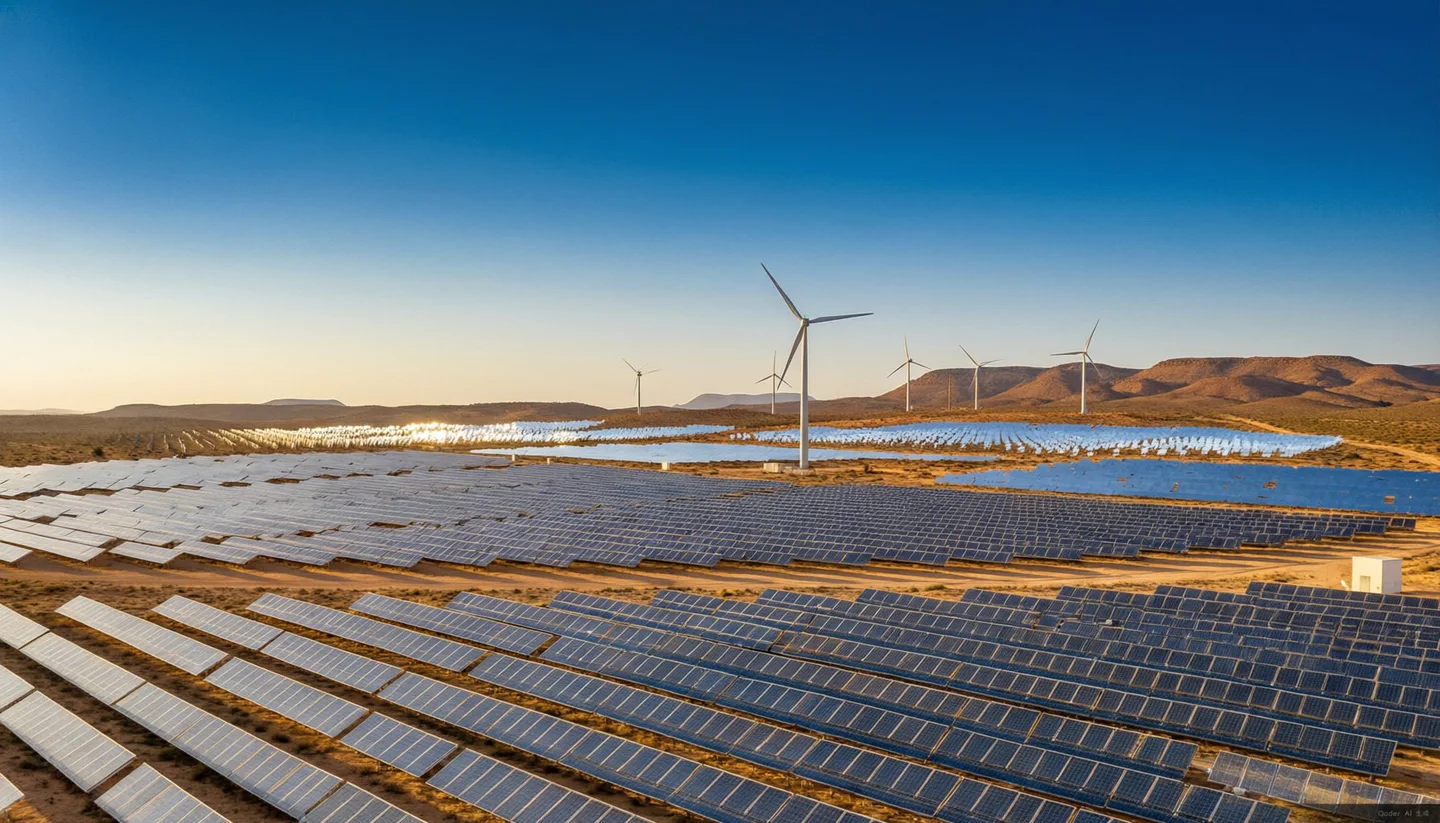
| New Energy and Energy Storageenergy | Morocco’s electricity market is framed by two laws: Law 13-09 establishes the renewable energy generation licence and independent power producer (IPP) power sales regime; Law 82-21 establishes the self-consumption regime, with implementing rules effective on June 9, 2026, dividing approval tiers by capacity (off-grid declaration / low-voltage filing / medium-voltage <5MW grid-connection agreement / ≥5MW licence). Nationwide acceptable grid-connected self-consumption capacity is 3,886 MW, and surplus power fed to the grid is priced by ANRE at MAD 0.18-0.21/kWh. |
| Vehicles and Heavy Equipmentvehicle | Morocco prohibits the import of used vehicles older than 5 years (explicitly banned by the 2011 Finance Law, Article 96 of the Highway Code implementing decree). Vehicle customs clearance is declared through the Customs BADR system, and the dutiable value is assessed against the official BADR-MCV valuation database; imported vehicles registered for the first time (except dealer imports) are subject to luxury stamp duty, levied on vehicle value on a four-tier progressive scale of 5%-20% (Article 6 of the 2017 Finance Law). According to the official Customs database, new passenger car imports are subject to 2.5% customs duty, 0.25% parafiscal levy, and 20% Value Added Tax (VAT); pure electric vehicles under the Ministry of Energy's electric mobility policy enjoy a preferential direction of customs duty reduced to 2.5%, exemption from luxury stamp duty and annual circulation tax (current figures are subject to verification via the customs clearance simulator). Imported vehicles must first pass the National Road Safety Agency (NARSA) technical compliance certification before registration and plating. |
| Cultural Tourism and Commercial Servicestourism | Tourism is a pillar industry and growth engine of Morocco’s economy. According to a statement by Morocco’s Ministry of Tourism (compiled by the Economic and Commercial Office of the Chinese Embassy in Morocco), Morocco received nearly 19.8 million tourists in 2025, up 14% from 2024, and tourism foreign exchange revenue reached USD 12.4 billion as of end-November 2025, up 19% year on year. Morocco is implementing the 2023-2026 Tourism Roadmap to expand air connectivity and hotel capacity and encourage investment in all regions; King Mohammed VI has set the vision of attracting 26 million tourists by 2030 and making Morocco a world-leading tourism destination. Morocco has applied visa-free entry for Chinese citizens since June 2016 (stay not exceeding 90 days, according to the Chinese Ministry of Foreign Affairs Consular Service website), and China-Morocco cultural tourism cooperation space continues to expand. |
Mining Exploration and Development
Non-phosphate minerals in Morocco follow the three-tier mining licence system under Mining Law No. 33-13—exploration authorization → research permit → exploitation licence—approved by the Ministry of Energy Transition and Sustainable Development (MEM), while the National Office of Hydrocarbons and Mines (ONHYM) is responsible for geological data and cooperative exploration. Exploration authorization areas cover 100–600 square kilometres (2 years, renewable for 1 year); an exploitation licence is valid for 10 years and can be continuously renewed, must be held by a legal entity in Morocco, and foreign investors may hold 100% equity. Mining licence holding costs are low (50 dirhams per square kilometre for exploration), with core spending on exploration work and infrastructure.
Infrastructure Construction
Morocco’s infrastructure opportunities are concentrated in energy corridors and industrial support: the Nigeria-Morocco Gas Pipeline (AAGP) planned route is about 6,900 km, connecting 13 West African countries, with investment of about USD 25 billion, and first gas targeted for 2031 (compiled from public information; business opportunities are subject to official announcements by each participant); power plants, industrial parks, and logistics facilities continue to release engineering and equipment demand.
New Energy and Energy Storage
Morocco’s electricity market is framed by two laws: Law 13-09 establishes the renewable energy generation licence and independent power producer (IPP) power sales regime; Law 82-21 establishes the self-consumption regime, with implementing rules effective on June 9, 2026, dividing approval tiers by capacity (off-grid declaration / low-voltage filing / medium-voltage <5MW grid-connection agreement / ≥5MW licence). Nationwide acceptable grid-connected self-consumption capacity is 3,886 MW, and surplus power fed to the grid is priced by ANRE at MAD 0.18-0.21/kWh.
Vehicles and Heavy Equipment
Morocco prohibits the import of used vehicles older than 5 years (explicitly banned by the 2011 Finance Law, Article 96 of the Highway Code implementing decree). Vehicle customs clearance is declared through the Customs BADR system, and the dutiable value is assessed against the official BADR-MCV valuation database; imported vehicles registered for the first time (except dealer imports) are subject to luxury stamp duty, levied on vehicle value on a four-tier progressive scale of 5%-20% (Article 6 of the 2017 Finance Law). According to the official Customs database, new passenger car imports are subject to 2.5% customs duty, 0.25% parafiscal levy, and 20% Value Added Tax (VAT); pure electric vehicles under the Ministry of Energy's electric mobility policy enjoy a preferential direction of customs duty reduced to 2.5%, exemption from luxury stamp duty and annual circulation tax (current figures are subject to verification via the customs clearance simulator). Imported vehicles must first pass the National Road Safety Agency (NARSA) technical compliance certification before registration and plating.
Cultural Tourism and Commercial Services
Tourism is a pillar industry and growth engine of Morocco’s economy. According to a statement by Morocco’s Ministry of Tourism (compiled by the Economic and Commercial Office of the Chinese Embassy in Morocco), Morocco received nearly 19.8 million tourists in 2025, up 14% from 2024, and tourism foreign exchange revenue reached USD 12.4 billion as of end-November 2025, up 19% year on year. Morocco is implementing the 2023-2026 Tourism Roadmap to expand air connectivity and hotel capacity and encourage investment in all regions; King Mohammed VI has set the vision of attracting 26 million tourists by 2030 and making Morocco a world-leading tourism destination. Morocco has applied visa-free entry for Chinese citizens since June 2016 (stay not exceeding 90 days, according to the Chinese Ministry of Foreign Affairs Consular Service website), and China-Morocco cultural tourism cooperation space continues to expand.
- 01
Mining Exploration and Development
Implementation path: Greenfield development takes about 7-10 years from establishment to production; brownfield M&A can gain control in 6-18 months; combining both is recommended. Equipment imports can use the CGI 92-I-6° 36-month Value Added Tax (VAT) exemption and customs economic regime (RED); mining equipment qualifies for a preferential 2.5% tariff. Investments ≥ MAD 50 million can apply for an investment agreement through the AMDIE/CRI single window, locking in up to 30% subsidies. Mining licence information can be verified online via the Digital Mining Cadastre Portal (dmcm.mem.gov.ma).
- 02
Infrastructure Construction
Entry path for engineering contractors: company establishment (RC/ICE) → PortNet import registration → temporary admission of equipment (RED-AT regime: quarterly usage fees, re-export upon expiry); projects with signed investment agreements can enjoy full exemption from customs duties and Value Added Tax (VAT). Customs clearance must be declared through the BADR system by a licensed customs broker. Chinese enterprises should choose temporary import or fixed asset investment based on the project cycle (CGI 92-I-6° 36-month Value Added Tax (VAT) exemption).
- 03
New Energy and Energy Storage
Three key points for equipment export compliance: HS classification determines the tax burden (solar modules 8541.43: 2.5% customs duty + 10% preferential Value Added Tax (VAT)); pre-shipment VoC certification under Product Safety Law 24-09 (authorized bodies such as TÜV/Bureau Veritas, three routes A/B/C); CMIM marking affixed before leaving the factory. Power plant investments must first verify the grid node’s acceptable capacity with ONEE/SRM; grid connection requires impact study, technical review, and agreement signing in sequence, and construction must be completed within 2 years after the agreement.
- 04
Vehicles and Heavy Equipment
Implementation path: establish a Limited Liability Company (SARL) with articles of association specifying vehicle import/export, sales, and leasing business scope, obtain a customs importer code and register for the BADR system; for each batch of vehicles, complete DAPS prior declaration, customs clearance and tax payment, NARSA technical inspection and individual vehicle homologation (homologation à l'unité), and registration and plates in sequence; from shipment in China to road use generally takes about 6-8 weeks. Used car sales can be carried out with a business licence, and dealers may apply the 20% Value Added Tax (VAT) margin taxation regime (2013 Finance Law); leasing is a regulated activity and requires administrative authorization from the province (Wilaya/Préfecture), and the new specifications implemented in April 2024 set requirements for minimum fleet size and financial capacity. Huaqiao Silk Road Tech can provide one-stop support for company establishment, import/export qualifications, certification processing, and fiscal and tax compliance.
- 05
Cultural Tourism and Commercial Services
Landing Services: Huaqiao Silk Road provides one-stop landing support for cultural tourism enterprises—company setup (Commercial Register (RC), ICE tax registration, bank account opening) and ongoing tax, financial, and accounting compliance; Casablanca physical showroom supports brands and products to land and display before the team arrives; China-Morocco economic and trade forums and exhibition business provide local government-enterprise channels and B2B supply-demand matching; local consultant network accompanies qualification processing, labor employment, and bilingual contract review, and can assist in connecting with local hotels, travel agencies, and cultural tourism supply chain resources. We, with service capability as our standard, accompany Chinese cultural tourism enterprises from market research to stable operation.
Multi-industry customized go-global implementation solutions
Explore Industry SolutionsMining Exploration and Development
Non-phosphate minerals in Morocco follow the three-tier mining licence system under Mining Law No. 33-13—exploration authorization → research permit → exploitation licence—approved by the Ministry of Energy Transition and Sustainable Development (MEM), while the National Office of Hydrocarbons and Mines (ONHYM) is responsible for geological data and cooperative exploration. Exploration authorization areas cover 100–600 square kilometres (2 years, renewable for 1 year); an exploitation licence is valid for 10 years and can be continuously renewed, must be held by a legal entity in Morocco, and foreign investors may hold 100% equity. Mining licence holding costs are low (50 dirhams per square kilometre for exploration), with core spending on exploration work and infrastructure.
Learn More
Infrastructure Construction
Morocco’s infrastructure opportunities are concentrated in energy corridors and industrial support: the Nigeria-Morocco Gas Pipeline (AAGP) planned route is about 6,900 km, connecting 13 West African countries, with investment of about USD 25 billion, and first gas targeted for 2031 (compiled from public information; business opportunities are subject to official announcements by each participant); power plants, industrial parks, and logistics facilities continue to release engineering and equipment demand.
Learn More
New Energy and Energy Storage
Morocco’s electricity market is framed by two laws: Law 13-09 establishes the renewable energy generation licence and independent power producer (IPP) power sales regime; Law 82-21 establishes the self-consumption regime, with implementing rules effective on June 9, 2026, dividing approval tiers by capacity (off-grid declaration / low-voltage filing / medium-voltage <5MW grid-connection agreement / ≥5MW licence). Nationwide acceptable grid-connected self-consumption capacity is 3,886 MW, and surplus power fed to the grid is priced by ANRE at MAD 0.18-0.21/kWh.
Learn More
Vehicles and Heavy Equipment
Morocco prohibits the import of used vehicles older than 5 years (explicitly banned by the 2011 Finance Law, Article 96 of the Highway Code implementing decree). Vehicle customs clearance is declared through the Customs BADR system, and the dutiable value is assessed against the official BADR-MCV valuation database; imported vehicles registered for the first time (except dealer imports) are subject to luxury stamp duty, levied on vehicle value on a four-tier progressive scale of 5%-20% (Article 6 of the 2017 Finance Law). According to the official Customs database, new passenger car imports are subject to 2.5% customs duty, 0.25% parafiscal levy, and 20% Value Added Tax (VAT); pure electric vehicles under the Ministry of Energy's electric mobility policy enjoy a preferential direction of customs duty reduced to 2.5%, exemption from luxury stamp duty and annual circulation tax (current figures are subject to verification via the customs clearance simulator). Imported vehicles must first pass the National Road Safety Agency (NARSA) technical compliance certification before registration and plating.
Learn More
Cultural Tourism and Commercial Services
Tourism is a pillar industry and growth engine of Morocco’s economy. According to a statement by Morocco’s Ministry of Tourism (compiled by the Economic and Commercial Office of the Chinese Embassy in Morocco), Morocco received nearly 19.8 million tourists in 2025, up 14% from 2024, and tourism foreign exchange revenue reached USD 12.4 billion as of end-November 2025, up 19% year on year. Morocco is implementing the 2023-2026 Tourism Roadmap to expand air connectivity and hotel capacity and encourage investment in all regions; King Mohammed VI has set the vision of attracting 26 million tourists by 2030 and making Morocco a world-leading tourism destination. Morocco has applied visa-free entry for Chinese citizens since June 2016 (stay not exceeding 90 days, according to the Chinese Ministry of Foreign Affairs Consular Service website), and China-Morocco cultural tourism cooperation space continues to expand.
Learn More
Mining Projects Zone
Premium polymetallic, gold, and barite mining licence resources in Morocco and China-Africa (redacted display)
Opportunities Hub
Officially verified local projects, tenders, and procurement opportunities in Morocco.
Travaux de construction d’un équipement sur pilotis sur l’Oued Bouregreg
Travaux de construction d’un équipement sur pilotis sur l’Oued BouregregAppel d'offres ouvert (réf. 34/AO/BOUREGREG/2026) : Travaux de construction d’un équipement sur pilotis sur l’Oued Bouregreg. remise des plis avant le 2026-11-16 10:30 (heure locale, UTC+1).
Closing: 16 Nov 2026
Travaux de construction de 05 abris identiques pour voyageurs au niveau de la commune territoriale de Laghoualem.
Travaux de construction de 05 abris identiques pour voyageurs au niveau de la commune territoriale de Laghoualem.Appel d'offres ouvert (réf. 05/2026) : Travaux de construction de 05 abris identiques pour voyageurs au niveau de la commune territoriale de Laghoualem.. remise des plis avant le 2026-11-16 10:00 (heure locale, UTC+1).
Closing: 16 Nov 2026
Location de licences de logiciel de gestion des bases de données ORACLE de la Direction Générale de l’Hydraulique à Rabat
Location de licences de logiciel de gestion des bases de données ORACLE de la Direction Générale de l’Hydraulique à RabatAppel d'offres ouvert (réf. 100/2026/DGH) : Location de licences de logiciel de gestion des bases de données ORACLE de la Direction Générale de l’Hydraulique à Rabat. remise des plis avant le 2026-11-16 10:00 (heure locale, UTC+1).
Closing: 16 Nov 2026
TRAVAUX DE CONSTRUCTION DES PISTES AUX COMMUNES MZAMZA EL JANOUBIA ET N’KHILA - PROVINCE DE SETTAT
TRAVAUX DE CONSTRUCTION DES PISTES AUX COMMUNES MZAMZA EL JANOUBIA ET N’KHILA - PROVINCE DE SETTATAppel d'offres ouvert (réf. 81/INDH/T/2026) : TRAVAUX DE CONSTRUCTION DES PISTES AUX COMMUNES MZAMZA EL JANOUBIA ET N’KHILA - PROVINCE DE SETTAT. remise des plis avant le 2026-11-16 10:00 (heure locale, UTC+1).
Closing: 16 Nov 2026
Latest News
View All NewsMorocco Trade Week and China-Morocco Smart Living Expo 2026 to open in Casablanca in November
14/09/2026
West Africa Energy Corridor Update: Nigeria-Morocco Gas Pipeline (AAGP) Project Overview
18/08/2026
Association delegation visits Dalian for in-depth exchanges on Morocco-China trade and industrial cooperation
09/07/2026
Featured Client Cases
View All Cases[Scenario Example] Company Establishment and Investment Agreement Application Implementation Scenario
View Case Details
[Scenario Example] Six-Stage Compliance Scenario for Exporting New Energy Products to Morocco
View Case Details
[Scenario Example] China-Morocco Exhibition and Local Showroom Product Going Global Scenario
View Case Details
Start Your Morocco Expansion Journey
Submit your request and our local advisory team will respond within 24 hours